Vegan Makeup: What to Look For Without Compromising Luxury
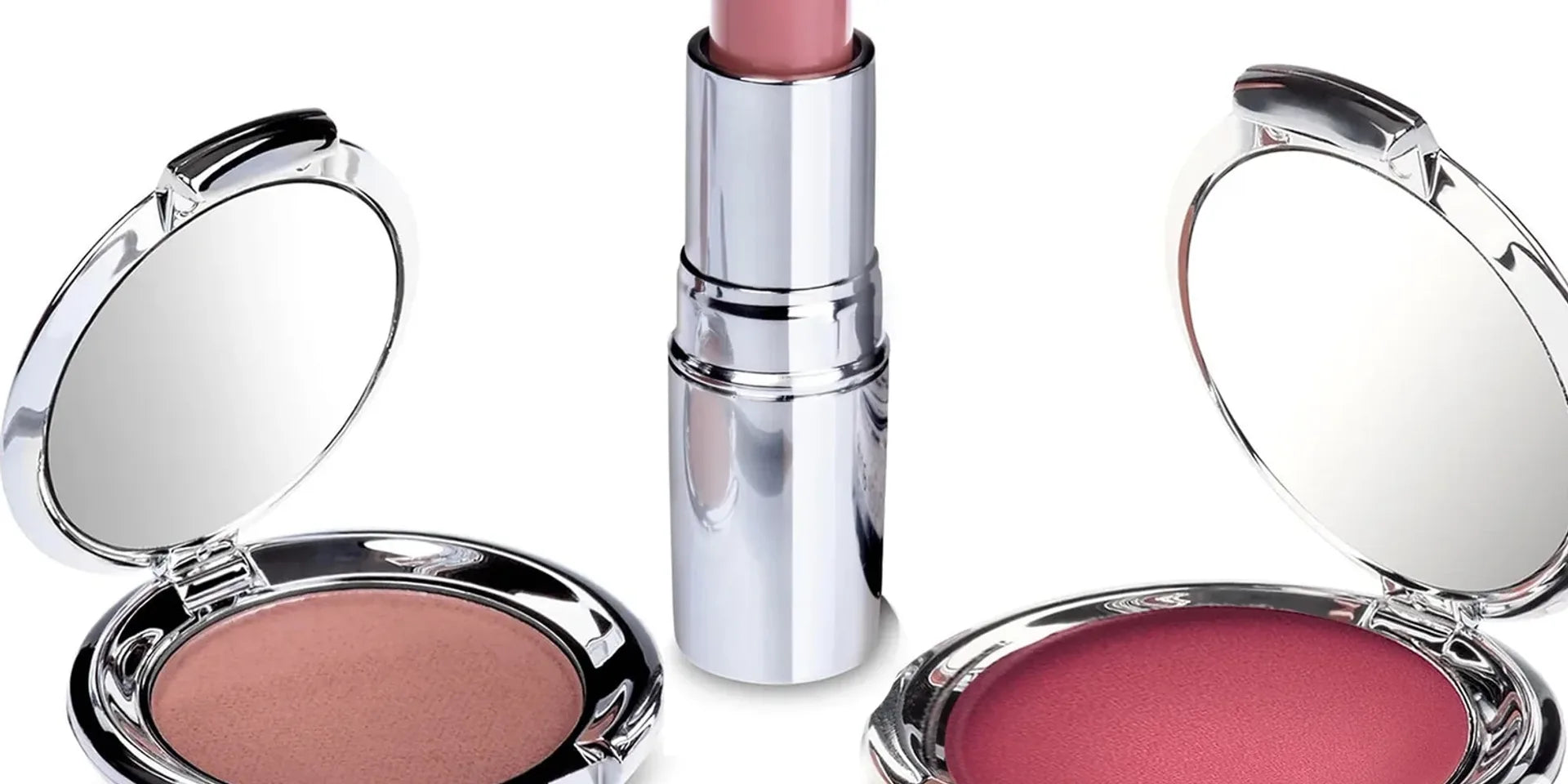
The most convincing makeup swaps are the ones you notice on your face, not in a slogan. A satin nude that melts into the skin, keeps its pigment through an afternoon. And still looks polished in natural light makes ethical choices feel less like compromise and more like good taste.
Vegan makeup contains no animal-derived ingredients or animal byproducts, but that label alone does not guarantee cruelty-free testing. Look beyond the front of the package and check the brand's ingredient standards and testing policy before you buy.
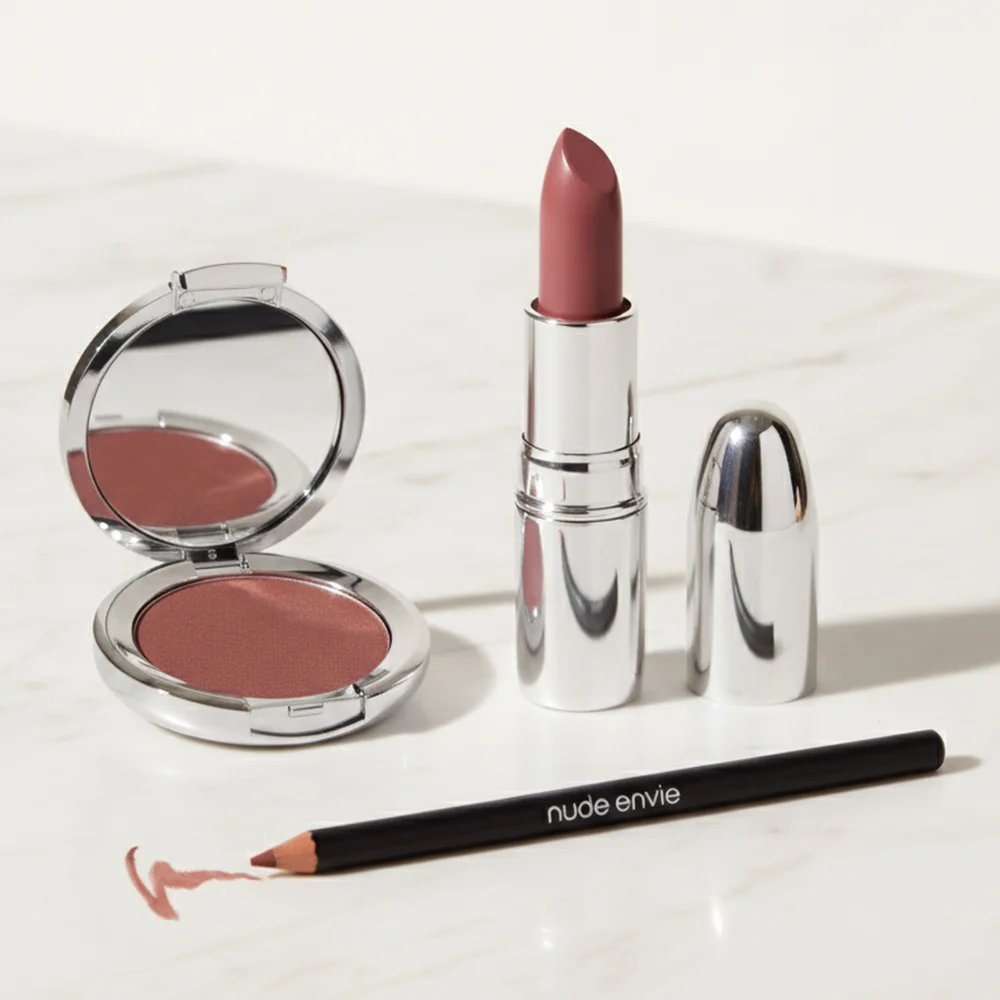
That distinction matters because familiar cosmetic ingredients can include carmine, lanolin, keratin, collagen, elastin, tallow, and silk, while terms such as vegan and clean are not always standardized. Nude Envie takes a more considered approach: its nude-focused collection is designed to coordinate across lips. Eyes, cheeks, and nails, with formulas shaped around a natural, quietly luxurious finish. The first step is understanding exactly what the label promises, and what it leaves unsaid.
Book a Virtual Beauty Consultation for personalized guidance on building your vegan makeup routine.
What "Vegan Makeup" Actually Means
Vegan makeup is defined by what it leaves out: no animal-derived ingredients, no animal byproducts, and no hidden animal-derived processing aids in the formula itself.
The first time I started checking ingredient lists closely. I was surprised by how many familiar beauty formulas relied on ingredients I would never expect to find in a lipstick or highlighter. Vegan makeup is simpler to define than the label can make it sound: it contains no animal-derived ingredients or animal byproducts. That applies to the formula itself, not necessarily to the product's packaging, manufacturing process, or testing policy. This academic source explains the core definition.
The ingredients behind the label
Traditional cosmetics may use animal-derived materials for color, slip, conditioning, structure, or shine. Common examples include:
- Carmine: a red pigment made from insects. Mineral pigments and plant-based colorants can provide alternatives.
- Lanolin: a waxy ingredient derived from sheep's wool. Plant oils, butters, and waxes can add softness and emollience instead.
- Keratin, collagen, and elastin: animal-derived proteins associated with conditioning and film-forming benefits. Plant proteins, amino acids, and synthetic peptides may serve similar functional roles.
- Tallow: rendered animal fat that can contribute richness and texture. Vegetable oils, botanical butters, and plant waxes are common substitutes.
- Silk: a fiber-derived ingredient used for a smooth, silky feel. Synthetic or plant-derived conditioning agents can create slip without using silk.
These ingredients are documented among the animal-derived materials found in traditional cosmetics, although formulas vary by product and brand. If you are curating your vegan makeup collection, reading the full ingredient list is more useful than relying on the front of the box alone. A creamy texture or luminous finish does not require animal ingredients, and the best formulas should still feel comfortable, blend evenly, and wear beautifully in real life.
Why the wording can be confusing
Here is the catch: terms such as vegan, clean, and natural are not always standardized across cosmetics marketing. Dermatology providers have noted that the growing number of these labels raises understandable questions about what they actually mean. In practice, look for a clear ingredient policy and transparent brand information rather than assuming every product uses the term identically. And remember, vegan describes ingredients, not animal testing. For a closer look at one category, our guide to the best vegan highlighters is a useful place to start.
Vegan vs. Cruelty-Free: Understanding the Difference
Vegan and cruelty-free are separate claims that answer two different questions: vegan describes what is in the formula, while cruelty-free describes how it was tested. A product can satisfy one without satisfying the other.
These labels are often used together, but they answer two different questions. Vegan describes what is in the formula. Cruelty-free describes how the product and its ingredients were tested. A lipstick can be vegan without being cruelty-free, or cruelty-free without being vegan. That distinction matters when you are building a makeup bag around both personal values and a thoughtful formula.
As the distinction is commonly explained, vegan makeup contains no animal products or by-products, while cruelty-free products have not been tested on animals. The labels can still feel slippery at the shelf. Dermatology providers note that terms such as vegan and cruelty-free are not always standardized. Which helps explain why shoppers have so many questions about what a claim actually covers. Reading the full ingredient and brand policy information is more useful than relying on a single front-of-pack word.
| Label combination | What it means | What to check |
|---|---|---|
| Vegan and cruelty-free | No animal-derived ingredients and no animal testing. | Look for clear ingredient and testing policies from the brand. |
| Vegan only | No animal-derived ingredients, but the testing policy may not meet cruelty-free standards. | Check whether the finished product and ingredients are tested on animals. |
| Cruelty-free only | No animal testing, but the formula may contain animal-derived ingredients. | Review the ingredient list for materials such as carmine, lanolin, keratin, or beeswax. |
| Neither | The formula may contain animal-derived ingredients and may involve animal testing. | Seek a more transparent product policy if these standards matter to you. |
Nude Envie takes the simpler route: its formulations are both vegan and cruelty-free, as well as paraben-free. Ingredients such as jojoba oil, shea butter, and vitamin E support the brand's comfortable, polished approach to color without relying on animal-derived materials. If I am choosing a nude lipstick or cheek shade, that clarity is reassuring. I can focus on the finish, pigment, and wear rather than decoding a vague label.
Can Vegan Makeup Deliver Luxury Performance?
Yes, modern vegan formulas can deliver the pigmentation, blendability, and wear time you expect from luxury makeup. The key is what plant-based and synthetic ingredients replace in the formulation, not what they remove.
I am wary of any beauty claim that asks me to accept less in exchange for a better label. Makeup still has to earn its place in my routine: pigment should build without turning chalky. A cream should melt into skin rather than sit on top of it, and the finish should remain polished after several hours. The good news is that vegan makeup no longer means choosing between those details and your values.
Modern formulas can use plant-based ingredients such as jojoba oil, shea butter, vitamin E, and hyaluronic acid to support slip, comfort, and a smoother-looking finish. They can also use carefully developed synthetic ingredients to replace animal-derived materials while preserving the performance formulators want. Research on vegan cosmetics describes these plant-based derivatives and synthetic alternatives as the foundation of many contemporary formulas, rather than a limitation built into them (research on vegan makeup formulations).
What changes in the formula?
For complexion and cheek products, the difference is often most noticeable in texture. A well-made vegan cream can feel cushiony and spread evenly, then settle into a natural skin finish instead of leaving a waxy drag. In color cosmetics, modern pigments and film-forming technology can deliver strong payoff, reliable adhesion, and a refined finish without relying on traditional animal-derived ingredients. I have tried vegan formulas that wear beautifully from a morning meeting through dinner, and others that fade quickly or feel dry. The formula, shade, and your skin type still matter.
Key ingredients that build luxury texture
What makes a vegan formula feel indulgent rather than basic often comes down to the quality of its botanical and synthetic components:
- Jojoba oil: closely mimics the skin's natural sebum for easy absorption and a silky finish
- Shea butter: provides cushion and creaminess without greasiness
- Vitamin E: acts as an antioxidant and supports smooth, even application
- Hyaluronic acid: adds lightweight moisture that helps color wear evenly
- Glycine soja oil: a plant-derived emollient that helps pigments bind and glide
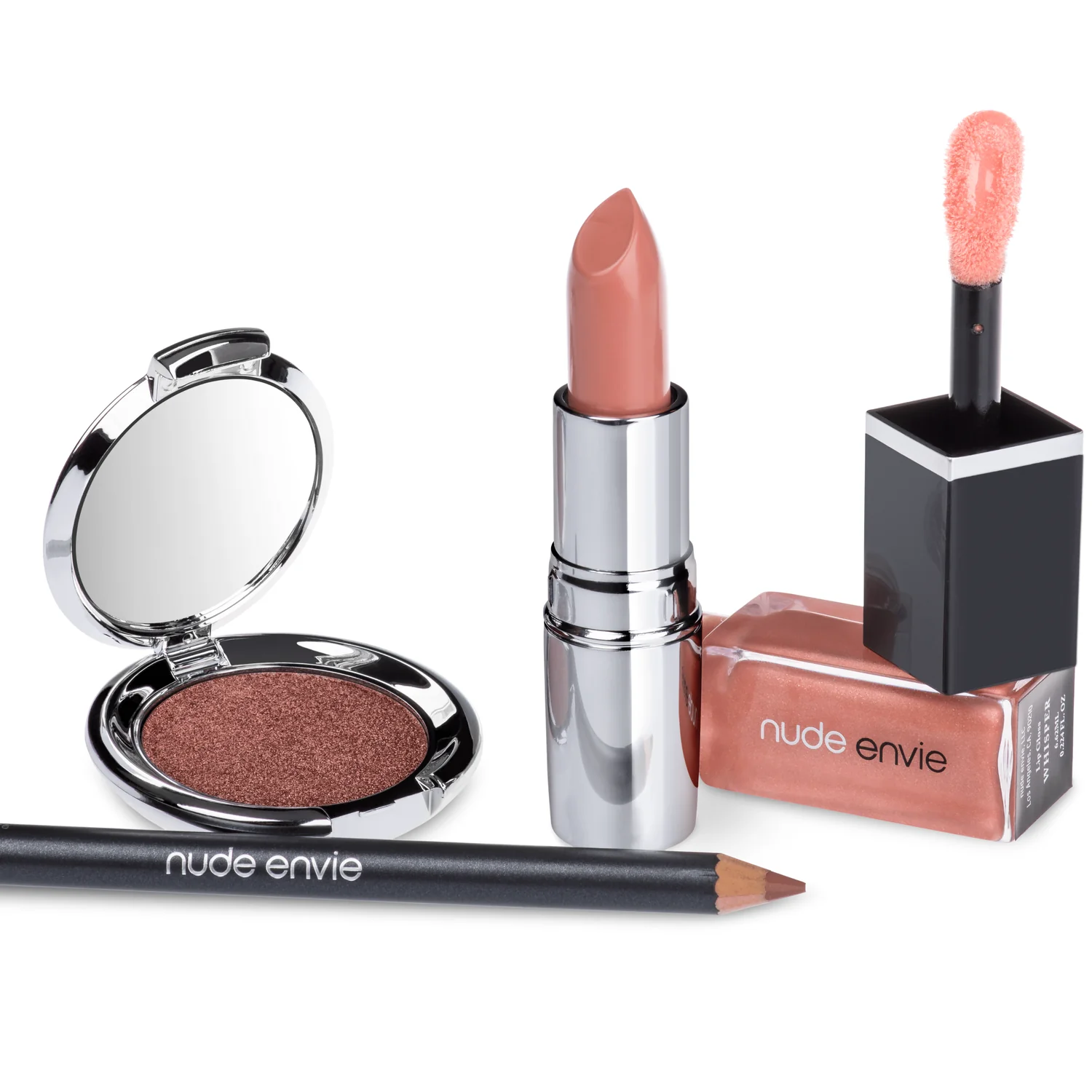
Nude Envie incorporates several of these in its formulas. When I wear the Lipstick Intuition, for example. The jojoba oil and shea butter base gives it that melt-into-skin feel I want from a satin lip without the waxy drag some traditional formulas leave behind. The finish stays luminous through a workday with one touch-up after lunch.
Luxury is moving beyond the ingredient list
Luxury beauty is increasingly curating vegan and clean collections in response to demand for products that feel both considered and effective. That shift matters because it puts vegan makeup in the same conversation as finish, artistry, and sensorial experience, not just ethics (industry context on vegan luxury beauty). The best versions give you the quiet pleasure luxury makeup should provide: finely balanced color, comfortable application, and a finish that looks intentional in daylight and evening light.
Nude Envie takes that approach across its range. Every product is vegan, cruelty-free, and paraben-free, with pearlescent satin finishes designed to look luminous rather than glittery. The effect is a soft, polished radiance that does not make the formula feel worthy but underwhelming. If you are starting from scratch, the Best Nude Makeup Kit guide is a useful way to build a coordinated collection without sacrificing the texture or finish you expect from luxury makeup.
What to Look for on the Label: A Quick Guide
Reading a vegan makeup label comes down to a four-point check: scan the ingredient list. Look for third-party certification, verify the brand's official position, and cross-check cruelty-free status separately.
Reading a vegan makeup label should feel reassuring, not like decoding a chemistry exam. The catch is that terms such as "vegan" are not always standardized, so a little cross-checking is worthwhile. I use this four-step scan before adding a new formula to my routine.
-
Step 1: Scan the ingredient list for animal derivatives
Start with the full ingredient list, not just the front of the box. Ingredients commonly associated with animal-derived cosmetics include carmine, lanolin, keratin, collagen, elastin, tallow, and silk. Carmine can be used as a red pigment, while lanolin is a wax derived from sheep's wool. If you see an ingredient you do not recognize, pause rather than assuming it is vegan. The ingredient reference behind this guide is a useful starting point, but the brand should be able to clarify anything ambiguous.
-
Step 2: Look for a credible vegan logo
A recognizable third-party vegan certification can make label reading considerably easier. Look for the certifier's name or logo, and check what its standards cover. A small logo is helpful evidence, but it should complement the ingredient list rather than replace it. On a product page, I also look for a clear statement that the formula itself contains no animal products or by-products.
-
Step 3: Verify the brand's official position
Visit the brand's About page, FAQ, or product details and read the wording carefully. "Our products are vegan" is more useful than a vague reference to clean beauty. Nude Envie clearly lists ingredients and notes vegan, cruelty-free, and paraben-free status on every product page. The formulas call out familiar ingredients such as jojoba oil, vitamin E, and glycine soja oil, which makes the product information easier to review before purchase.
-
Step 4: Cross-check cruelty-free certification
Vegan and cruelty-free describe different things. Vegan refers to ingredients; cruelty-free refers to animal testing. A product can meet one standard without meeting the other, so check for a cruelty-free certification or an explicit brand policy as well. This distinction matters when you want an ethical routine in the fullest sense. For a closer look at how a specific category can still feel polished and luminous, browse this guide to the vegan highlighter. If you are building a coordinated everyday look, the nude lipstick guide is a useful next stop.
How to Choose Your Vegan Makeup Brand
The best vegan makeup brand for you balances transparency, shade range, formula performance, and price. A brand that makes its ingredient standards easy to verify is worth more than one with a prominent vegan badge and vague sourcing.
When I am choosing a vegan makeup brand, I look past the green packaging first. The useful questions are more practical: Can I understand what is in the formula? Will the shade work in daylight as well as in a flattering shop mirror? Does the finish wear gracefully, and does the price make sense for how often I will reach for it?
Start with transparency, then check the range
Ingredient transparency matters because "vegan" is not a fully standardized marketing term. A thoughtful brand should make its formulation and ethical commitments easy to understand, rather than asking you to decode a vague badge. I also look for cruelty-free policies separately. Vegan means no animal-derived ingredients or byproducts, while cruelty-free refers to animal testing, so the two claims are not interchangeable.
Shade range is just as revealing. Nude Envie takes a more edited approach than brands that offer hundreds of disconnected colors. Its products are organized by warm, cool, and neutral undertones, with nude and natural shades designed to coordinate across lips, eyes, cheeks, and nails. That is genuinely helpful when you want a polished look without spending an hour comparing near-identical beige swatches. The guide to finding your perfect vegan nude lipstick is a useful place to begin.
Compare performance and price honestly
Price should be considered alongside texture, pigment, and wear. Budget vegan brands such as Pacifica and e.l.f. can be sensible starting points, particularly if you are experimenting with a new category. At the other end, Westman Atelier sits around $48 to $85, while Tom Ford products commonly range from $57 to $96. Nude Envie occupies a persuasive middle ground: its $18 to $54 range feels like accessible luxury. With sophisticated formulas and a cohesive color story rather than a one-off statement product.
That positioning is strengthened by founder Isabel Madison's second-generation cosmetic chemistry heritage. It gives the brand a point of view beyond an ingredient claim. And the result is makeup intended to feel considered on the skin, not merely virtuous on the label. Nude Envie is also available at Neiman Marcus, and its celebrity fans include Julianne Hough and Olivia Culpo.
Choose a philosophy you will actually use
The best brand is one whose philosophy makes your routine easier. Nude Envie is exclusively focused on natural-looking color, so building a harmonious collection feels less like hunting and more like editing. If undertone matching still feels uncertain, book a Virtual Beauty Consultation for personalized guidance. A vegan makeup brand should support better choices without adding another layer of decision fatigue.
Frequently Asked Questions
These are the questions I hear most often from readers who are new to vegan makeup or trying to separate marketing from facts.
What makes makeup vegan?
Vegan makeup contains no animal-derived ingredients or byproducts. That can include familiar cosmetic ingredients such as carmine, lanolin, keratin, collagen, tallow, and silk, so the ingredient list matters more than the front-of-pack imagery. Ingredient guidance from California State University, Northridge is a useful reference when you want to check a formula carefully.
Is vegan makeup better for sensitive skin?
Not automatically. Vegan formulas can suit your preferences, but skin comfort depends on the complete formula, fragrance, preservatives, pigments, and your own sensitivities. Patch-test a new product, especially around the eyes, and pay attention to how the texture feels after several hours rather than assuming a vegan label guarantees gentleness.
Does vegan makeup wear as well as traditional makeup?
It can. Wear depends on the specific formula and how you prep and set it, not simply on whether the ingredients are animal-derived. Look for the finish and performance you actually want, then test pigment, blendability, creasing, and touch-ups in real lighting. A well-made vegan satin product should feel considered on the skin, not like a compromise.
What is the difference between vegan and cruelty-free makeup?
Vegan describes the ingredients: the product contains no animal products or byproducts. Cruelty-free describes animal testing. They are separate claims, so one label does not automatically confirm the other. Lone Star College's explanation distinguishes the two clearly, while dermatology providers also note that terms such as vegan and cruelty-free can be confusing when brands do not define them consistently.
Ready to Explore Vegan Makeup?
Once you know what to look for, choosing vegan makeup can feel less like a compromise and more like refining your personal routine. Nude Envie brings together curated nude shades and luxury formulas designed to work harmoniously across lips, eyes, cheeks, and nails. Explore Nude Envie's curated collection of vegan, cruelty-free nude makeup and get started with the best-sellers that suit your look.